Dr Days Junction
Jump to navigation
Jump to search
To Temple Meads: St Philips Causeway
To Wales, the North or London: Ducie Road
To Bath: Rhubarb Loop
History
Dr Days Junction was named after Dr Willam Edward Day who lived in Barrow Road. The area was named after him when the bridge at Barrow Road needed to be cut for the railway to pass.
Track Plans
-
 A track plan of Dr Days Junction from 1988.

1960s
-
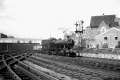 The bridge that carries Barrow Road across the junction. 3806 takes the Rhubarb Loop. © Gerald Peacock

1970s
-
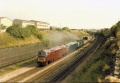 The date is approx 1978 and Peter Rendall captures a couple of Wezzies being taken away to a new future in preservation. This photo shows a track layout with four tracks up Filton Bank. © Peter Rendall

1980s
-

-
 A similar view, only taken from a passing train. In the background are the gas holders at St Philips. The area now known as Barton Hill TMD was used for repairing wagons. 30.3.89


2003/4
-
 A sign on a wall next to the junction.
 -
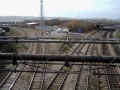 A view of the diverging tracks taken from Barrow Road. The lines on the left go in the direction of Bath or the Bristol Avoiding Line, while the lines on the right head into Temple Meads.
 -
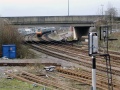 The view towards Temple Meads is now dominated by St Philips Causeway. The Voyager is awaiting clearance across South Wales Junction before making it's final approach to the station.
 -
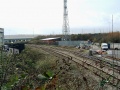 The network of rails at this spot create a triangular junction diverging from the main Bristol to Bath mainline. This section was quadruple track in the past and Dr Days Junction was a much grander place complete with 21 carriage sidings and a signal box.
 -
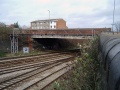 The bridge that carries Barrow Road across the junction. This is the same view as in Gerald Peacock's photo at the top of the page.
 -
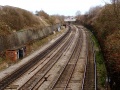 The view north from Barrow Road bridge. In the distance Ducie Road crosses the railway.
 -
 158751 scurries through the junction on its way to Temple Meads.
 -
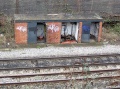 A view of some of the lineside huts and debris at this location.


